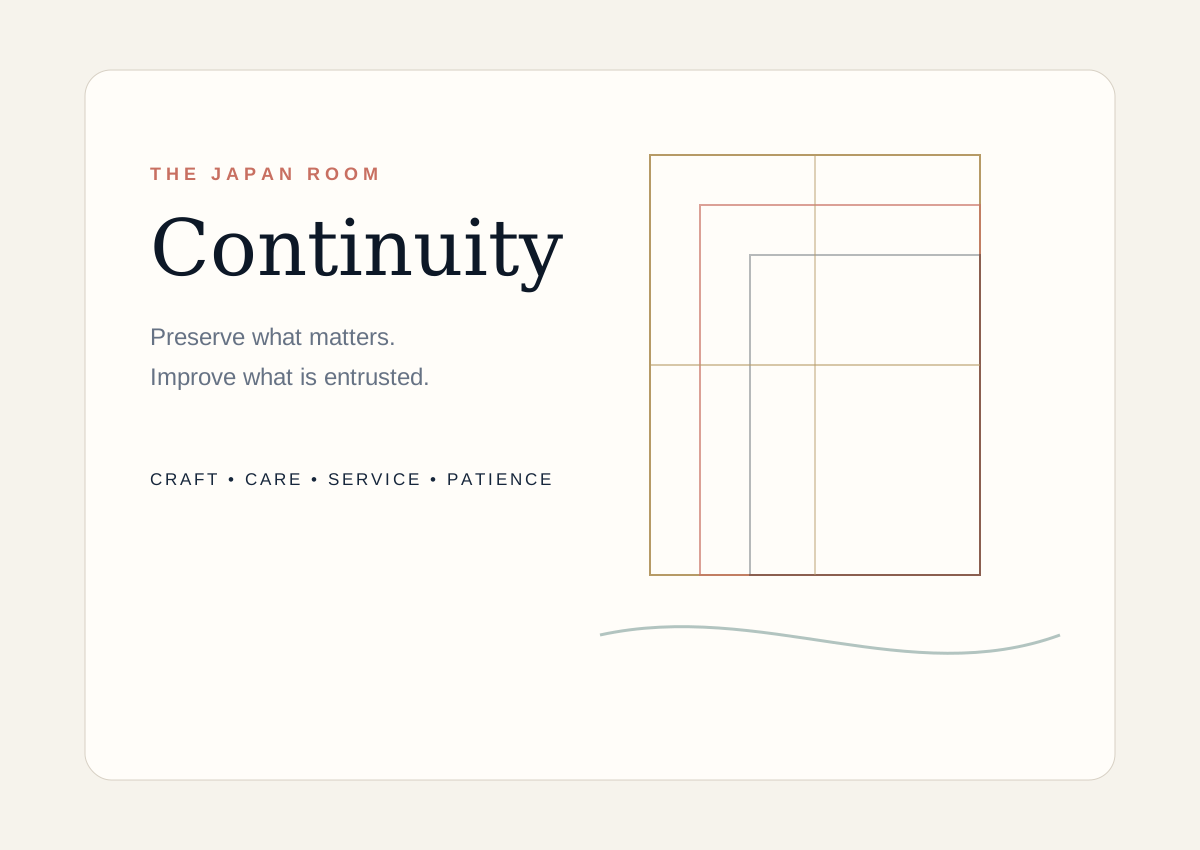
Japan
Continuity
Disciplined craft, refinement, harmony, care, service, patience and respect for place and tradition.
Enter the Japan room →
Continuity meets new beginnings. American AI was conceived as an American–Japanese undertaking: not one culture appended to the other, but a shared foundation built for the service of people everywhere.
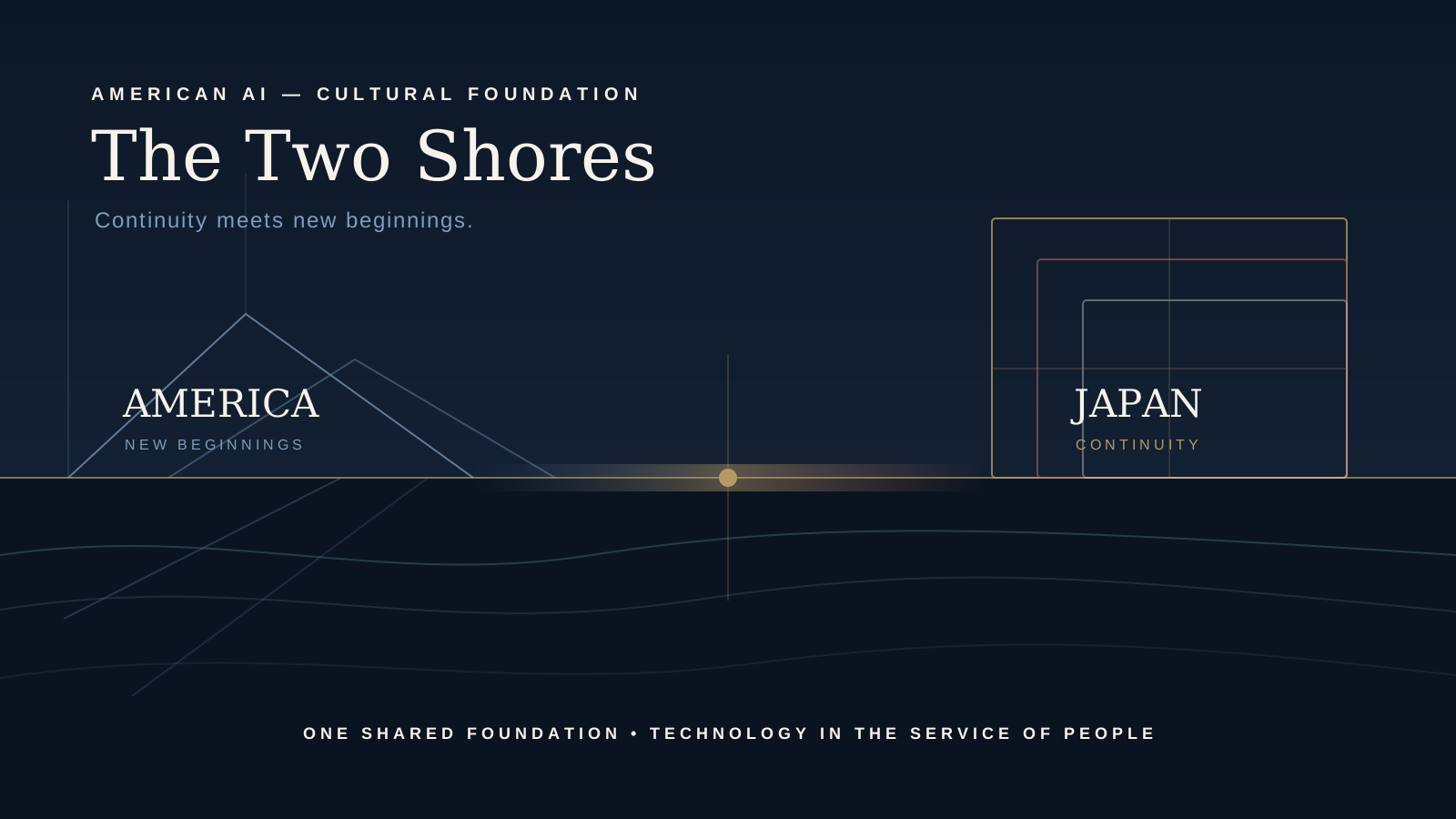
The cultural foundation and the human-governance story are parts of the same idea. Intelligence can be powerful, personal and useful without becoming the final authority over the person it serves.
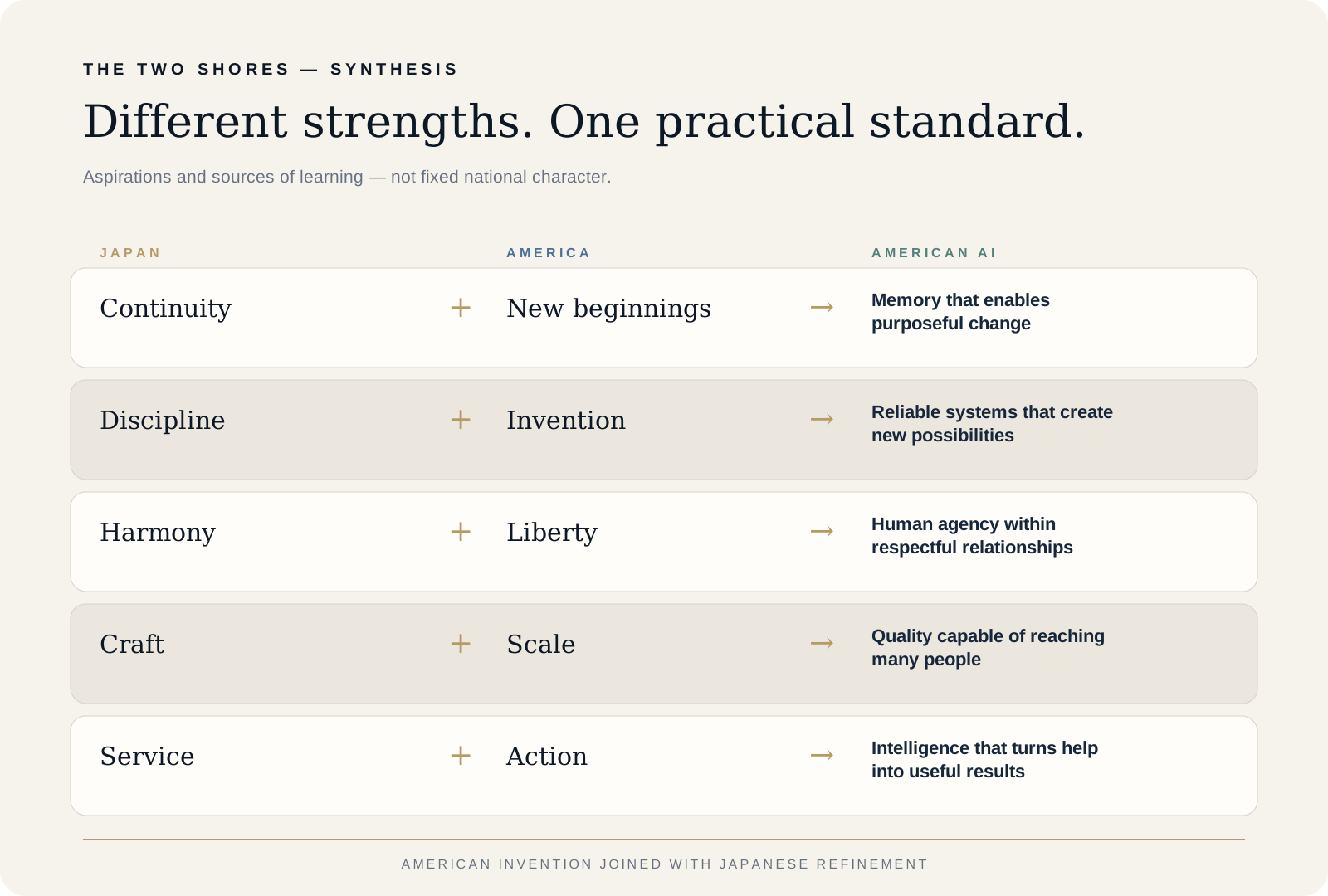
America contributes the right to question, choose and begin. Japan contributes the discipline to preserve, refine and serve. Together they provide a practical compass for the design of PIA, Fumi and the wider American AI estate.
Read the full Public Founding Charter →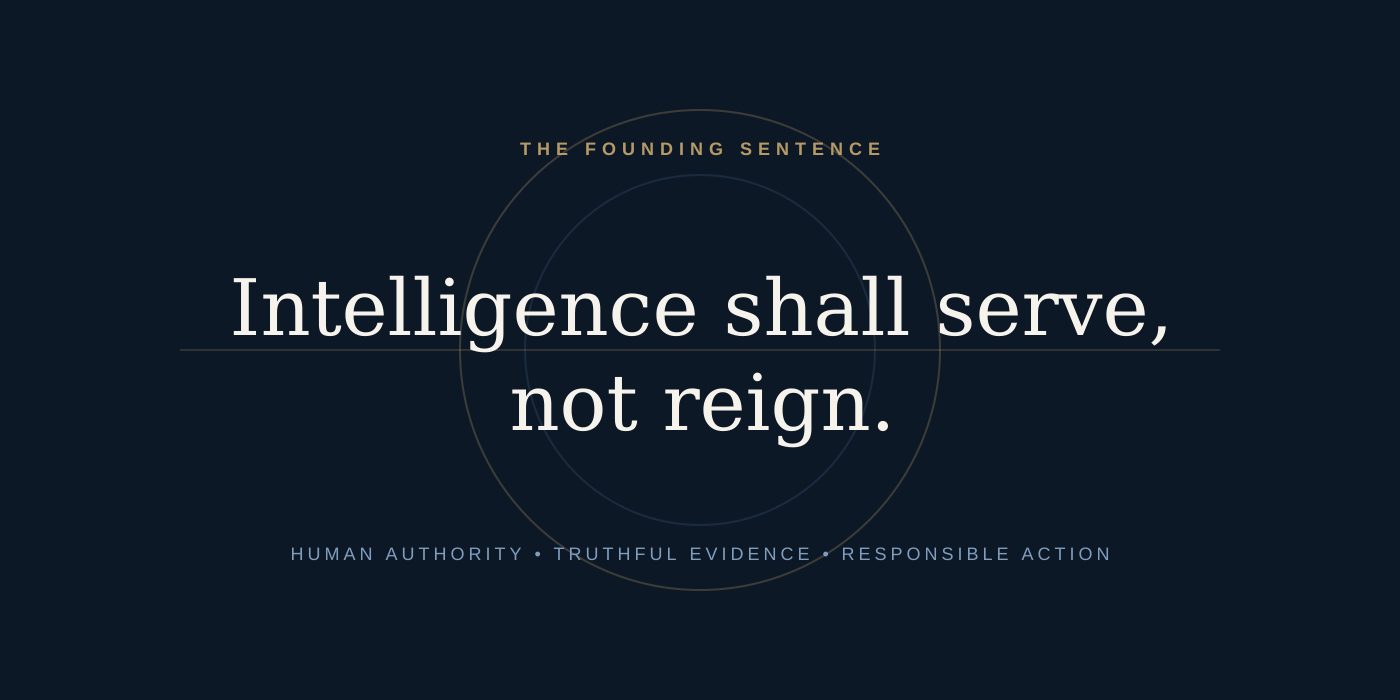
The purpose is not to blend both cultures into a vague international style. Each room preserves a distinct contribution before showing how the principles work together.
Disciplined craft, refinement, harmony, care, service, patience and respect for place and tradition.
Enter the Japan room →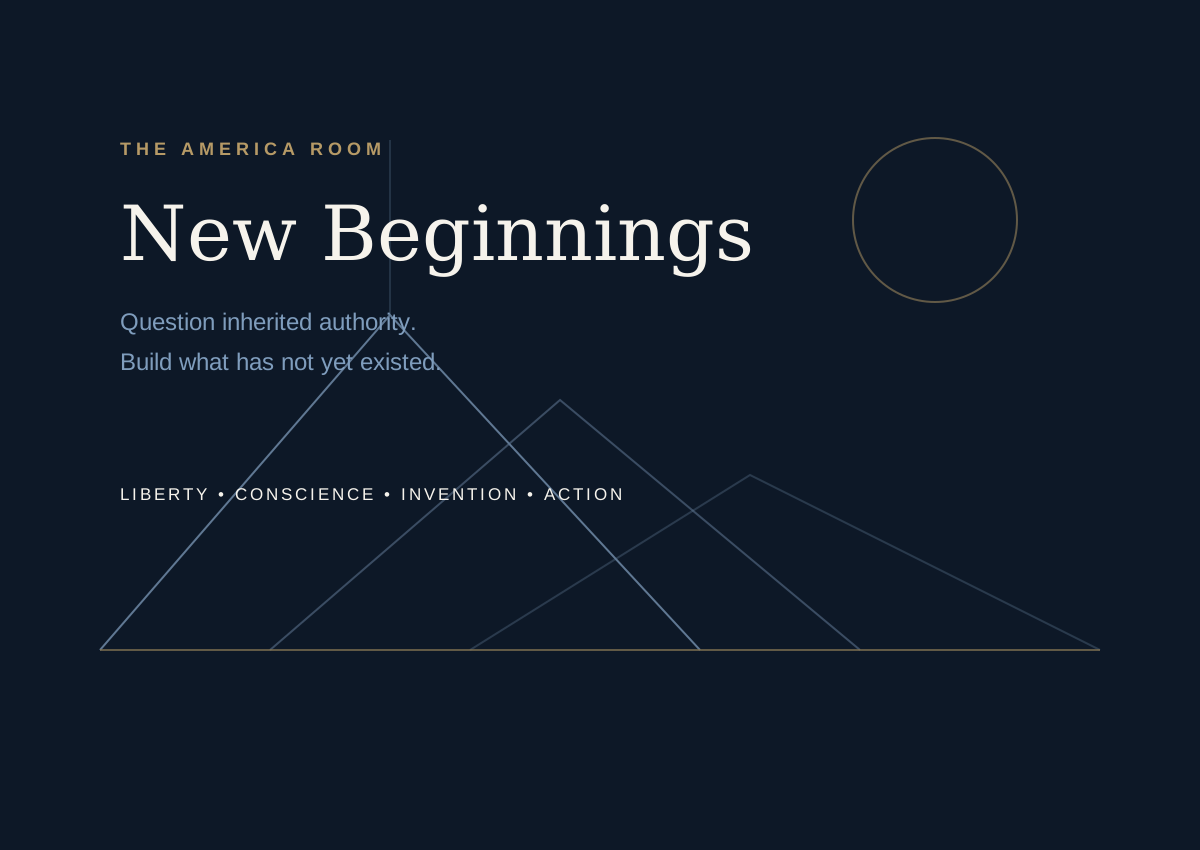
Liberty, conscience, invention, openness, individual agency, constitutional restraint and practical action.
Enter the America room →The compact is not a list of national virtues. It is a design discipline: freedom needs responsibility, invention needs consequence, harmony needs room for dissent and continuity needs openness to change.
New capability should be judged by what it enables for people, what it risks and who remains accountable.
Memory and durable relationships should help people change direction rather than trap them inside old assumptions.
Freedom to question and refuse works best when decisions, permissions and consequences can also be examined.
Care and social consideration must never become a reason to suppress contradiction, review or a human stop.
The philosophy matters only where it changes what the company builds: memory that supports change; systems that combine reliability with invention; agency inside respectful relationships; quality that can scale; and help that becomes useful action.
These qualities are used as aspirations and sources of learning. They are not claims that every Japanese or American person shares one fixed character.
Context and memory are carried forward with permission, while the individual remains free to question, correct and change direction.
Language, travel and hospitality support are designed to respect local context rather than flatten Japan into translation and tourism tips.
Independent scrutiny, visible authority and a human route of interruption apply the constitutional lesson that useful power still needs limits.
Careful preparation and dependable work should lead to useful results, not polished conversation alone.
The company learns from traditions and institutions without assigning a fixed character to every person in either country.
Documented fact, public principle, interpretation, reflection and creative narrative remain distinguishable.
Japan is invited to help shape design, research, governance and future relationships—not merely localise an American product.
The foundation matters only where it improves memory, agency, protection, service, quality and accountable action.
The controlling company source is the Public Founding Charter. Public cultural explanations also draw on appropriately attributed institutional and scholarly sources. Examples include Japan National Tourism Organization on omotenashi, JAPAN HOUSE Los Angeles on ma, Stanford Encyclopedia of Philosophy on Japanese aesthetics, and the U.S. National Archives founding documents.
These sources support public explanation. They do not establish a Japanese corporate partner, investor, endorsement or completed legal relationship.